
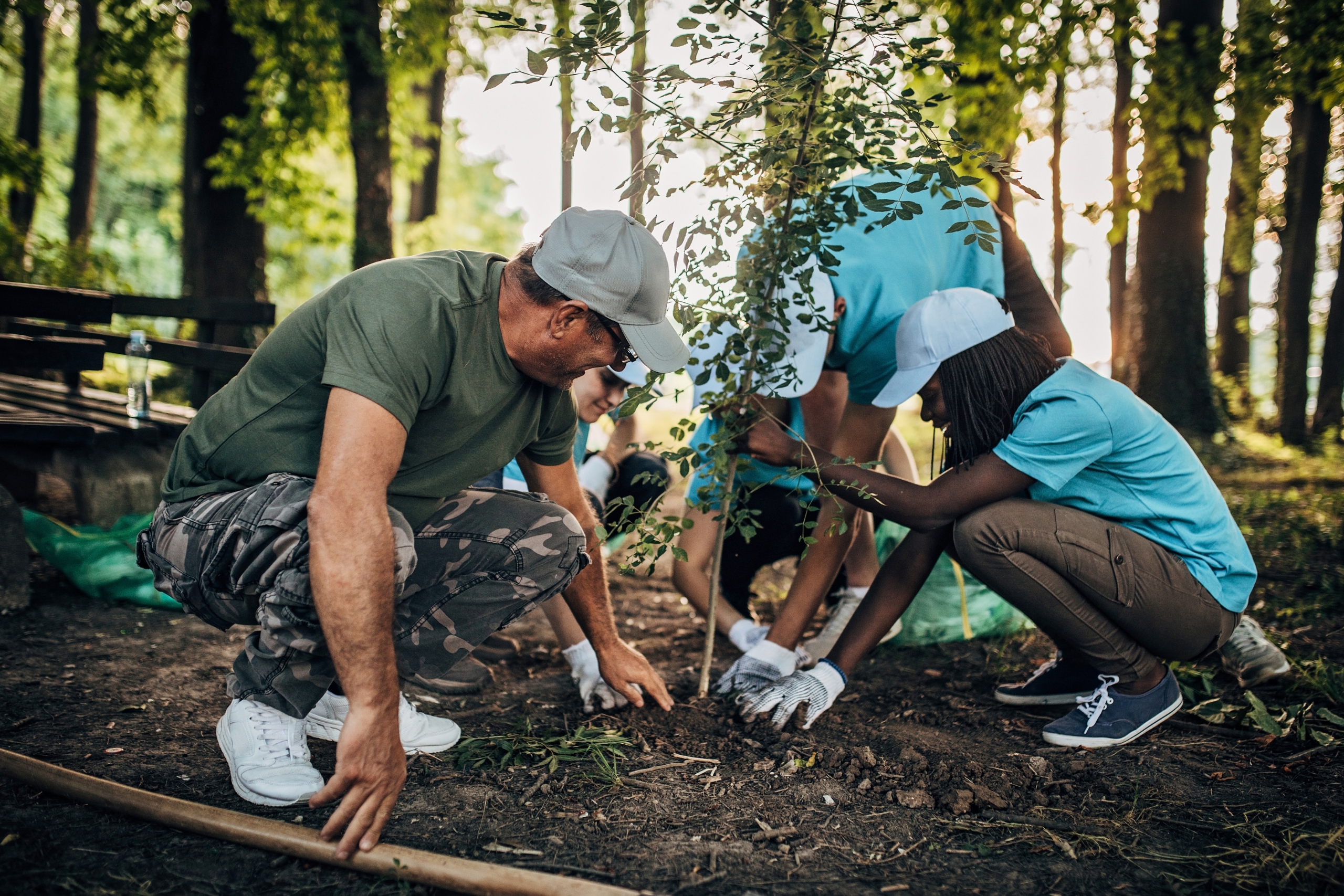
There is a specific category of travel experience that sits entirely apart from the beach holiday, the city break, and the cultural tour — the kind of trip whose meaning is not derived from the beauty of what you witness but from the specific contribution of what you do, whose memories are not primarily photographs of spectacular places but the specific physical exhaustion of the person who spent the morning planting trees on a hillside that was bare when they arrived and will be a forest when a child who was not yet born stands in its shade, or the person who filled a hundred trash bags on a stretch of coastline that the sea turtles will safely nest on this season because somebody cared enough to show up and clean it. Eco-volunteer travel — the specific form of nature-focused travel whose itinerary includes the meaningful, hands-on conservation activities that contribute genuinely to the health of the natural environments being visited — is one of the fastest-growing and most deeply personally rewarding travel categories available in the contemporary tourism landscape, and its growth reflects something genuinely important about what the most thoughtful travelers are increasingly seeking from the time and the money they invest in leaving home. The person who plants trees in a reforestation project, feeds rescued animals at a wildlife sanctuary, helps restore a coral reef by removing invasive species, participates in a community-led beach cleanup, assists in the planting of mangroves along a vulnerable coastline, or contributes to the citizen science data collection that conservation researchers depend on is not merely a tourist who happens to be doing something good — they are an active participant in the ecological story of the specific place they are visiting, and the specific quality of that participation creates the deepest and the most enduring connection between the traveler and the place that any form of travel produces. This guide celebrates the most meaningful and the most accessible eco-volunteer activities available in the most compelling destinations across the globe — the activities that you can contribute to on your next trip and that will matter to the natural world long after you have returned home.
Tree Planting and Reforestation: Growing a Forest With Your Own Hands
Tree planting is the eco-volunteer activity whose specific combination of physical simplicity, immediate visible impact, and extraordinary long-term ecological consequence creates the most accessible and the most personally meaningful conservation contribution available to any traveler regardless of their specific environmental knowledge or their physical fitness level. The act of planting a tree — the specific physical engagement of the hole dug, the seedling placed, the soil firmed around the roots — is the most direct available participation in the biological process whose product, across the decades of the planted tree’s growth, includes the carbon sequestration that addresses the climate whose disruption is the foundational challenge of the age, the habitat whose provision for the birds, the insects, the mammals, and the full web of interdependent life that depends on the forest creates the specific biodiversity whose recovery in degraded landscapes the reforestation project most directly enables.
The Philippines — whose massive deforestation across the twentieth century created the specific landscape of eroded hillsides, disrupted watersheds, and lost biodiversity that the national reforestation programs and the numerous NGO-led community forestry initiatives are collectively addressing with some of the most ambitious tree planting targets available in Southeast Asian conservation — is one of the most compelling destinations for the traveler whose eco-volunteer interest includes tree planting in the specific context of the tropical forest restoration whose ecological richness and whose community benefit make the contribution feel immediately and specifically meaningful. The organizations including the La Viña community forestry program in Negros Occidental, the various indigenous community reforestation projects in Mindanao, and the mangrove restoration initiatives in the coastal areas of the Visayas and Luzon provide the specific volunteer access to the tree planting activities whose contribution to the Philippine forest recovery is as real and as measurable as the specific number of trees whose survival to adulthood each planting event most directly enables. Kenya’s Great Rift Valley reforestation programs, the community tree planting initiatives of the Costa Rican cloud forest restoration projects, and the Amazon basin reforestation programs of Brazil whose scale of both the deforestation challenge and the restoration opportunity creates the specific context where the individual volunteer’s contribution is a genuinely meaningful addition to one of the most important ecological restoration efforts on earth are the destination contexts where the tree planting volunteer finds the combination of meaningful work, beautiful environment, and the specific sense of purpose that the forest restoration activity at its most complete and its most directly impactful most consistently and most powerfully provides.
Beach and Ocean Cleanup: Restoring the Coastlines That Feed the World
The beach and ocean cleanup is the eco-volunteer activity whose visual impact is the most immediately and the most dramatically satisfying available in conservation volunteering — the before-and-after comparison of the litter-strewn stretch of coastline whose morning appearance of scattered plastic, rope fragments, fishing line, and the full range of the oceanic debris whose accumulation from the global marine plastic pollution represents one of the most widespread and most damaging environmental problems of the contemporary era and whose afternoon appearance of the cleaned, restored beach whose absence of the visible pollution creates the specific emotional impact of the work made visible most completely and most directly expresses. The beach cleanup is also the eco-volunteer activity with the most consistently verified ecological benefit — the removal of the marine debris that entangles and ingests sea turtles, seabirds, and marine mammals, that smothers the coral and the seagrass that provides the nursery habitat for the fish species whose population health determines the food security of millions of coastal communities, and that fragments into the microplastics whose presence in the marine food chain represents the most pervasive and the most incompletely understood contamination of the ocean’s biological systems available in the contemporary environmental challenge.
The beach cleanup volunteer destinations whose specific combination of the conservation need and the volunteer access creates the most compelling and the most practically meaningful eco-volunteer beach experiences include the turtle nesting beaches of Costa Rica’s Tortuguero Coast, where the Leatherback and Green turtle nesting programs of the local conservation organizations combine the beach cleanup with the turtle monitoring activities whose specific contribution to the data collection that underpins the conservation management of these critically endangered species makes the volunteer’s participation in both activities the most comprehensively meaningful coastal conservation experience available. The Maldives — whose specific vulnerability as the world’s lowest-lying nation to the sea level rise whose threat is inseparable from the marine plastic pollution that the beach cleanup addresses makes the volunteer’s work feel specifically urgent and specifically connected to the most consequential environmental challenge of the era — provides the most visually spectacular beach cleanup context available, the specific combination of the world’s most beautiful coral atoll environment and the specific conservation urgency of the climate threat whose mitigation the marine ecosystem health most directly supports creating the eco-volunteer experience whose beauty and whose seriousness are simultaneously and equally compelling. The annual International Coastal Cleanup whose September event coordinates the simultaneous participation of hundreds of thousands of volunteers on beaches across every continent creates the most accessible entry point for the traveler whose eco-volunteer interest includes the beach cleanup activity whose specific contribution to the Ocean Conservancy’s most important single annual data collection and cleanup event makes the participation part of the global conservation movement rather than merely a local gesture whose impact, however real, is felt only in the specific stretch of coastline whose cleaning the individual event produces.
Farm and Animal Sanctuary Volunteering: Caring for the Creatures Who Need It Most
The farm and animal sanctuary volunteer experience is the eco-volunteer activity whose specific emotional rewards — the direct, hands-on, daily contact with the animals whose care is both the purpose of the activity and its most immediately and most personally meaningful reward — create the most consistently described as life-changing of all the eco-volunteer travel experiences, the specific quality of the relationship between the volunteer and the individual animal whose trust is earned through the patient, consistent, gentle provision of the food, the cleaning, the medical support, and the simple presence that the rescued, the rehabilitating, or the farm animal most directly needs and most visibly responds to with the specific behavior of the animal who feels safe and cared for creating the specific emotional bond whose depth is proportionate to the vulnerability of the creature who entered it from the place of the damaged, the neglected, or the wild.
Wildlife rescue and rehabilitation centers across Southeast Asia — the orangutan rehabilitation centers of Borneo and Sumatra whose specific mission of preparing the orphaned and the formerly captive orangutans for the return to the wild provides the volunteer with the specific combination of the daily animal care activities of food preparation, enclosure cleaning, behavioral enrichment, and the direct interaction whose specific management is carefully calibrated to maintain the wild behavioral repertoire that the successful rehabilitation most directly requires — are among the most emotionally powerful and the most ecologically important eco-volunteer animal care experiences available anywhere in the world. The elephant sanctuaries of Thailand and Cambodia whose specific distinction from the riding operations whose practices have been comprehensively criticized by animal welfare organizations provides the volunteer with the specific experience of the ethical elephant care whose activities of bathing, feeding, and observing the elephants in the natural social groupings that their welfare requires creates the most complete available ethical wildlife tourism experience in a region whose elephant population’s conservation is as urgent as its specific vulnerability is acute. The marine turtle hatchery programs of the Philippines, Sri Lanka, and the Caribbean — whose volunteer activities of the nest monitoring, the hatchling release, the beach patrolling, and the data recording combine the specific wonder of the sea turtle’s life cycle with the specific conservation contribution of the data whose collection the research programs that protect these ancient species most directly depend on — provide the farm and animal care volunteer with the specific experience of the participant in the conservation story whose continuation across the decades of the sea turtle’s biological timeline the volunteer’s contribution most directly and most measurably enables.
Coral Reef Restoration: Healing the Ocean’s Most Vital Ecosystem
Coral reef restoration is the eco-volunteer activity whose specific combination of the underwater environment’s extraordinary beauty and the ecological urgency of the reef’s conservation need creates the most visceral and the most immediately compelling argument for the specific conservation contribution available to the traveler whose combination of swimming or snorkeling ability and genuine environmental concern meets the specific requirements of the reef restoration activities whose accessibility to non-diving volunteers has expanded significantly as the coral gardening and reef monitoring programs have developed the specific techniques and the specific protocols whose application by minimally trained volunteers creates the measurable contribution that the conservation urgency most directly requires.
Coral gardening — the specific reef restoration technique whose cultivation of coral fragments on underwater nursery trees creates the coral growth that the direct transplantation to the damaged reef section then contributes to the recovery of the specific reef sections whose bleaching, whose anchor damage, or whose crown-of-thorns starfish predation has created the degraded condition that restoration efforts are addressing — is the volunteer activity whose specific physical accessibility to the snorkeler and the basic scuba diver creates the broadest possible volunteer participation base for the reef restoration work whose ecological importance is difficult to overstate given the specific statistic that coral reefs support approximately twenty-five percent of all marine species on earth despite covering less than one percent of the ocean floor. The Coral Triangle — the specific marine region whose boundaries encompass the waters of the Philippines, Indonesia, Malaysia, Papua New Guinea, Timor-Leste, and the Solomon Islands and whose extraordinary coral biodiversity makes it the most species-rich marine environment on earth — is the most compelling destination context for the coral reef restoration volunteer whose specific contribution to the conservation of the most biologically important marine ecosystem available creates the specific sense of ecological significance that the coral restoration activity in the most relevant available geographic context most directly produces.
Mangrove Planting: Protecting Coastlines and Nurturing Marine Life
Mangrove planting is the eco-volunteer activity whose specific combination of the coastal protection function, the carbon sequestration capacity, and the nursery habitat provision for the marine species whose juvenile life stages depend on the specific sheltered, nutrient-rich environment of the mangrove root system makes it one of the most ecologically multifunctional single conservation activities available — the specific investment of the volunteer’s time and physical effort in the planting of a mangrove seedling produces the specific long-term returns of the coastal erosion protection that the mangrove’s root system provides to the shorelines whose vulnerability to the storm surge and the sea-level rise is most directly and most cost-effectively addressed by the mangrove’s natural coastal engineering function, the blue carbon sequestration whose specific rate in the mangrove ecosystem exceeds that of the tropical forest per unit area, and the nursery habitat whose provision for the shrimp, the juvenile fish, and the invertebrate species that the mangrove’s complex root architecture most specifically shelters creates the fishery productivity that the coastal communities whose food security depends on the coastal marine ecosystem most directly and most immediately values.
The Philippines — whose mangrove coverage has been reduced by approximately seventy-five percent since the mid-twentieth century primarily through the conversion to aquaculture ponds whose specific ecological cost in the lost coastal protection and the lost fishery productivity has been progressively recognized as the specific environmental and economic loss that the mangrove restoration programs whose volunteer access is among the most organized and the most accessible available in Southeast Asia are collectively addressing — is the most compelling single-destination context for the mangrove planting volunteer whose specific contribution to one of the most ecologically important coastal restoration programs available in the Asia-Pacific region creates the specific sense of the meaningful conservation contribution that the eco-volunteer most directly seeks. The mangrove restoration programs of the Philippines’ coastal provinces, the community-based mangrove planting initiatives of Indonesia’s Java and Sumatra coasts, and the conservation organization-led mangrove restoration activities of the Florida Keys and the Gulf Coast whose specific American context makes the travel and tourism contribution to the domestic coastal ecosystem restoration as geographically accessible as the most motivated volunteer’s ambition and most logistically convenient as the most practically minded traveler’s planning most directly requires.
Citizen Science and Wildlife Monitoring: Contributing to Conservation Research
Citizen science is the eco-volunteer activity whose specific contribution is not the physical labor of the tree planting or the beach cleaning but the data collection whose specific value to the conservation researchers who depend on the population-scale, geographically distributed, continuously updated information that only the large volunteer networks of the citizen science program can provide at the specific scale and the specific temporal resolution that the conservation management decisions most directly require. The citizen science volunteer is the specific participant in the scientific process whose contribution of the careful observation, the accurate recording, and the reliable submission of the specific data that the research protocol most directly requires creates the specific dataset whose quality and whose coverage most directly determines the quality of the conservation decisions that the data is designed to inform.
The bird monitoring programs of the Audubon Society’s Christmas Bird Count, the butterfly monitoring of the North American Butterfly Association’s annual counts, the whale watching and behavior recording of the citizen science marine mammal monitoring programs whose volunteer observers contribute the sighting data that the population estimate methodologies most directly depend on, and the reef fish counting of the Reef Check global coral reef monitoring program whose standardized survey protocol allows the volunteer diver’s fish count to be directly compared with the data from reef sites across the globe are the specific citizen science activities whose accessibility to the non-specialist volunteer creates the broadest possible participation base for the scientific data collection whose scale requirements most directly exceed the capacity of the professional research community to fulfill without the specific amplification that the volunteer network provides. The Cornell Lab of Ornithology’s eBird platform — whose crowdsourced bird observation database has become the most comprehensive species distribution dataset available for any taxonomic group in the history of natural history science — is the most striking available demonstration of what the citizen science model can produce when the specific combination of the accessible protocol, the digital submission infrastructure, and the large and motivated volunteer base creates the specific data generation capacity whose product is the most complete available picture of the bird species distribution, abundance, and population trend across the full geographic range of the entire Western hemisphere.
Conclusion
The eco-volunteer trip is the travel experience whose specific rewards — the physical satisfaction of the meaningful work done, the emotional depth of the connection to the natural environment whose health your specific contribution has genuinely improved, and the specific sense of having been not merely a witness to the beauty of the natural world but a participant in its protection and its restoration — create the most completely fulfilling travel memories available in any form of tourism, the kind that are not primarily the photographs in the album but the specific lived experience of the person who stood in the specific place, did the specific work, and felt the specific combination of the exhaustion and the purpose and the connection to something larger than the individual journey that the most meaningful travel has always most completely produced. The tree that grows on the hillside where you planted it, the sea turtle that nests on the beach where your work helped remove the debris, the coral that grows from the fragment you helped attach to the nursery tree, and the data point in the global dataset that your careful observation contributed — these are the travel souvenirs that the travel and tourism industry can never mass-produce, that no luxury resort can offer as an amenity, and that no destination marketing campaign can create as a selling point. They are the specific, personal, and genuinely lasting evidence of the specific quality of the traveler who went somewhere not merely to see but to serve — and whose service, however modest in its individual contribution to the vast scale of the challenges that the natural world faces, is the most authentically meaningful expression of the love for the planet that the best eco-volunteer travel most completely and most personally enables.
