
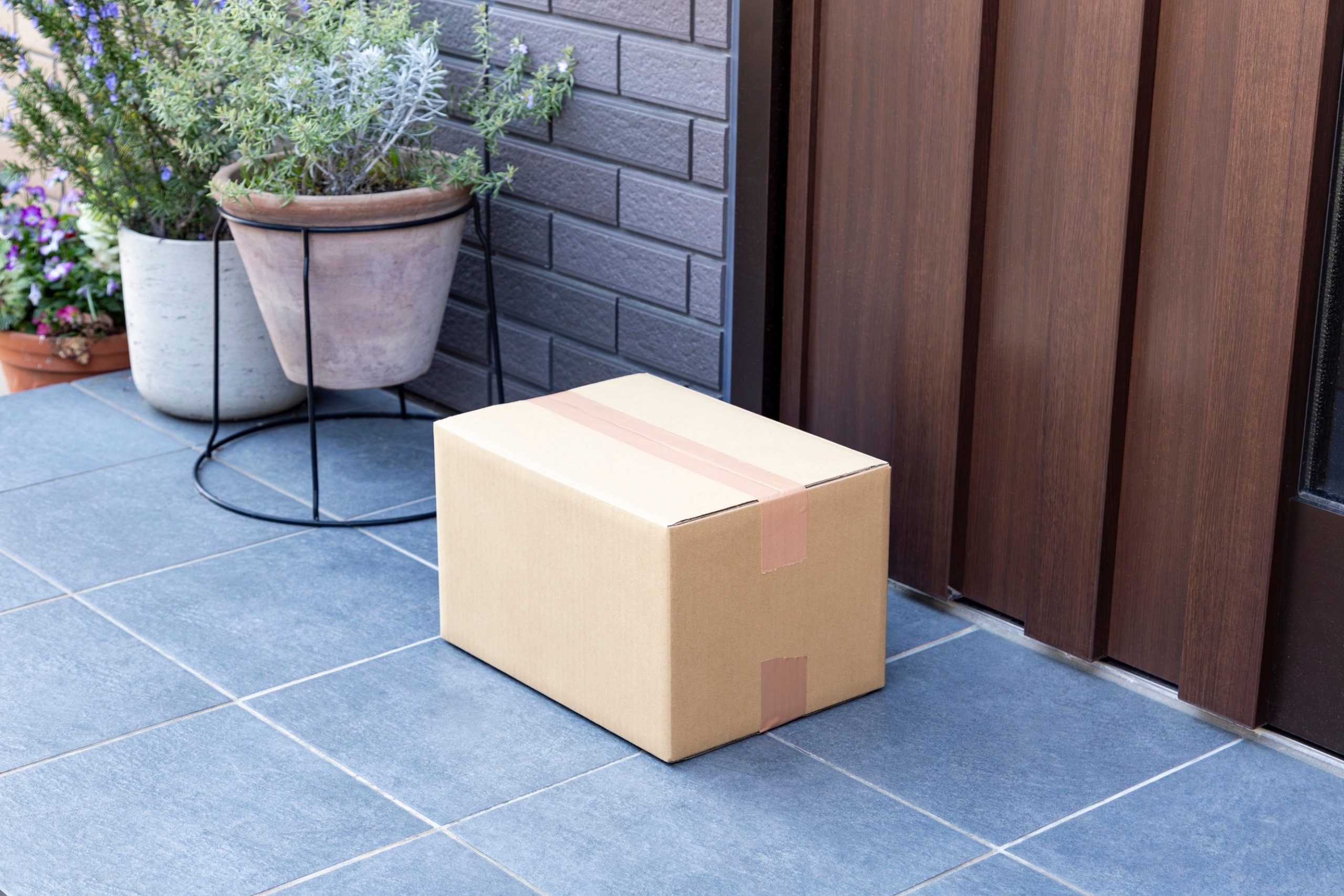
Package theft — the casual, opportunistic crime that has exploded in scale alongside the explosion in online shopping whose exponential growth has left tens of millions of unattended parcels on American doorsteps every single day — is now one of the most commonly experienced property crimes in the United States, affecting an estimated one in three Americans annually and generating billions of dollars in losses across the consumer population whose shift to e-commerce has inadvertently created the most accessible and the most low-risk theft opportunity available in the modern criminal landscape. The porch pirate — the specific category of thief whose business model requires nothing more sophisticated than the ability to drive slowly through a residential neighborhood, identify the visible package on an unattended doorstep, and walk away with it in the thirty seconds that the entire transaction requires — has become a persistent and genuinely frustrating feature of the contemporary home ownership and home rental experience, whose management through the combination of the physical security measures, the delivery management strategies, and the smart home technology solutions available in the current market is both more accessible and more effective than the majority of affected homeowners have yet discovered and implemented. This guide provides the complete, practical, and specifically actionable framework for protecting your packages from porch pirates — covering the delivery management options that prevent the unattended doorstep situation from occurring in the first place, the physical security installations whose presence deters and detects theft, the smart technology solutions whose real-time awareness and remote access create the most comprehensive available protection, and the community and carrier strategies whose use most effectively closes the gaps that any individual security measure leaves open. Because the package on your doorstep represents not merely the commercial value of its contents but the specific invasion of the sense of security in your own home that every act of theft most personally and most lastingly produces.
Smart Delivery Management: Preventing the Theft Before It Happens
The most effective parcel theft prevention strategy is the one that removes the package from the unattended doorstep entirely — the delivery management approach whose specific mechanism prevents the package from being left in the accessible, visible location that makes it available for the opportunistic theft whose entire business model depends on the unattended parcel’s vulnerable exposure. The delivery management options whose adoption eliminates the porch pirate’s opportunity before they arrive are therefore more valuable than any reactive security measure whose function is the detection and documentation of the theft that has already occurred, and their implementation as the primary layer of the parcel security strategy is the most impactful single investment available in the complete prevention of package theft rather than its merely better documentation.
Delivery instructions and signature requirements are the simplest available delivery management tools whose consistent use eliminates the unattended delivery scenario with the minimum possible friction for both the recipient and the carrier. The specific instruction to require a signature for delivery — whose activation in the retailer’s checkout process, in the Amazon delivery preferences, or in the carrier account settings creates the specific delivery protocol that prevents the leave-at-door default whose convenience creates the vulnerability that signature requirement most directly eliminates — is the delivery management choice whose implementation requires the specific accommodation of the recipient’s schedule but whose effectiveness in preventing the theft whose possibility it eliminates by ensuring a human presence at the point of delivery is total within the limits of the schedule accommodation it requires. The delivery to a neighbor whose availability and whose trustworthiness creates the specific watched delivery location that the unattended front door cannot provide is the simplest available human-based alternative to the unattended delivery whose effectiveness depends entirely on the neighbor relationship whose quality determines both the reliability of the accommodation and the security of the package in their custody before the recipient’s collection.
The Amazon Key and equivalent retailer in-garage delivery programs — whose specific mechanism of the carrier’s one-time access to the connected garage door opener creates the secure indoor delivery location that eliminates the porch exposure entirely — represent the most completely secure residential delivery option currently available to the homeowner whose garage infrastructure and whose comfort with the controlled carrier access that the program’s specific security protocols most carefully manage creates the specific delivery environment that the porch pirate’s opportunistic approach most completely cannot access. The specific security architecture of the in-garage delivery — the camera that records the delivery event from the opening of the garage door to the package placement and the closure that ends the carrier’s access, the one-time digital key whose specific use-limitation prevents the carrier’s repeated access beyond the specific delivery occasion, and the notification that alerts the homeowner to the delivery event whose real-time visibility provides the specific oversight whose comfort most directly enables the trust that the in-garage delivery program’s adoption most fundamentally requires — makes it the most technically secure available residential delivery option whose specific application to the homeowner whose garage infrastructure and whose package volume make its adoption most practically valuable.
Package Lockboxes and Secure Delivery Stations: The Physical Security Solution
The package lockbox — the weather-resistant, tamper-resistant secured container whose installation at the delivery point creates the specific physical security of the locked, anchored receptacle that the carrier deposits the package within and that only the recipient’s key or code can open — is the most widely applicable and the most permanently effective physical parcel security solution available for the homeowner or renter whose delivery volume, whose property characteristics, and whose preference for the hardware solution over the technology solution makes the physical lockbox the most appropriate choice in their specific parcel security context. The package lockbox market has expanded dramatically alongside the growth of parcel theft, producing a range of products from the modest residential options of the one-hundred-dollar steel box anchored to the porch with a security cable through the mid-range dedicated parcel lockboxes whose integrated mounting hardware and whose weatherproofing creates the permanent installation that the casual crime deterrent most productively employs, to the premium smart lockboxes whose combination of the physical security of the locked, anchored container with the electronic access control and the delivery notification creates the most comprehensively featured physical parcel security product available.
The specific installation requirements that make the package lockbox most effective in preventing the determined theft rather than merely the opportunistic grab are the anchoring and the mounting whose quality creates the specific physical resistance to the removal attempt that the untethered box whose lifting and carrying is the only required theft technique most directly fails to provide. The security cable whose threading through the box’s mounting hardware and around the fixed structural element of the porch column, the deck railing anchor, or the wall-mounted bracket whose bolt-through installation creates the permanent, tamper-resistant attachment that the theft-resistant lockbox most fundamentally requires to fulfill its function as a theft deterrent rather than a slightly delayed theft opportunity. The Amazon Hub Locker and the carrier-operated locker systems whose deployment at grocery stores, convenience stores, pharmacies, and the dedicated Amazon Hub locations across the majority of American metropolitan areas creates the specific alternative to the residential delivery whose specific security advantage of the locked, staffed, publicly surveilled commercial location eliminates the residential theft opportunity entirely at the cost of the recipient’s collection trip whose inconvenience is proportionate to the proximity of the nearest locker location to the recipient’s home and workplace.
The parcel delivery box whose size accommodates the range of the typical household’s package sizes — from the padded envelope through the shoebox-sized standard e-commerce shipment to the larger boxes whose dimensional constraints create the specific sizing challenge that the standard residential lockbox most commonly fails to address adequately — requires the careful measurement of the typical delivery dimensions before purchase to ensure the specific size investment matches the actual parcel volume that the household receives rather than the aspirational coverage of the oversized box whose purchase price and whose physical footprint both exceed what the actual delivery volume most practically requires. The smart parcel lockbox whose integration with the home’s WiFi network creates the real-time delivery notification and the remote access monitoring that transforms the passive physical security of the conventional lockbox into the active, connected security system is the premium physical security option whose combination of the hardware protection and the digital awareness creates the most complete available single-product parcel security solution for the home and garden of the technology-comfortable homeowner whose investment in the connected security infrastructure makes the smart lockbox’s additional cost relative to the conventional alternative the most directly justified available in the complete parcel security strategy.
Video Doorbells and Security Cameras: The Eyes That Never Sleep
The video doorbell is the single most widely adopted residential parcel security technology in the American home — the device whose combination of the motion-activated video recording, the real-time live view through the smartphone app, and the two-way audio whose deterrence value of the homeowner’s remote voice response to the approached porch creates the specific security technology whose effectiveness against the opportunistic porch pirate most directly reflects the porch pirate’s specific vulnerability to the observation and documentation whose presence eliminates the low-risk character of the crime that makes it the opportunistic choice rather than the deliberately planned one. The Ring Video Doorbell, the Google Nest Doorbell, and the Arlo Essential Video Doorbell are the most widely used products in the video doorbell category whose specific features of motion detection sensitivity, video resolution, night vision quality, and the smart alert customization whose specific trigger of the package delivery detection feature separates the parcel-specific notification from the general motion alert most completely addresses the homeowner’s specific parcel security use case within the broader residential security function that the video doorbell most comprehensively serves.
The specific placement of the security camera whose coverage of the delivery point creates the most useful recording in the theft documentation scenario — the angle whose field of view captures both the delivery zone and the street approach that the thief uses to access it, the height whose camera position captures the face rather than merely the top of the head that the downward-angled camera most commonly produces, and the specific additional camera whose side-yard coverage captures the license plate of the vehicle that the porch pirate most commonly uses to expand their theft radius beyond the walkable distance that the foot-based thief’s operational range most directly limits — is the camera placement intelligence whose application to the specific layout of the property creates the most forensically useful recording whose quality most directly supports the police report and the insurance claim whose documentation the theft’s aftermath most specifically requires. The doorbell camera’s specific limitation of the doorbell-height field of view whose downward angle most commonly captures the top of the thief’s head rather than the facial image that the identification requires is the specific technical limitation whose supplementation with the wall-mounted security camera positioned at the specific height and angle that captures the facial image most directly addresses the documentary gap that the doorbell camera alone most consistently creates in the theft evidence record whose completeness most directly determines the investigation outcome that the homeowner reporting the theft most specifically needs.
The neighborhood security camera network whose collective coverage of the approach routes, the common streets, and the delivery addresses that the video sharing platforms of Ring’s Neighbors app and the Nextdoor community safety features most directly enables creates the specific community security infrastructure whose effectiveness against the repeat-offender porch pirate who operates across a geographic territory rather than a single address most completely exceeds that of any individual home’s camera system. The specific community benefit of the shared camera network — the aggregated video evidence that documents the same vehicle or the same individual across multiple theft events in the same neighborhood, whose combination of the individual recordings creates the comprehensive evidence record that the police investigation most directly benefits from and that the isolated individual home camera most consistently fails to provide — is the community security argument whose understanding motivates the participation in the neighborhood camera network that creates the collective security infrastructure whose effectiveness most directly reflects the participation quality whose broadest possible adoption produces the most complete available coverage of the patrol routes and the approach corridors that the porch pirate’s specific operational geography most consistently uses.
Smart Home Technology: Real-Time Delivery Awareness and Remote Response
The smart home technology whose application to parcel security creates the most comprehensive real-time awareness and the most responsive remote management of the delivery event represents the highest-technology layer of the complete parcel security strategy — the connected devices, the smart doorbells, the delivery management apps, and the home automation integrations whose combination provides the homeowner with the specific real-time visibility into the delivery event, the immediate notification of the unattended package’s doorstep presence, and in the most advanced implementations the remote access capability whose use most directly enables the secure indoor delivery that the porch pirate’s outdoor access cannot reach. The smart home parcel security ecosystem is the layer whose adoption most specifically rewards the homeowner whose comfort with the connected home technology and whose investment in the compatible smart home infrastructure creates the specific integration capabilities that transform the collection of individual security devices into the coordinated, automated, real-time parcel security system whose whole is more effective than the sum of its individual parts.
The carrier delivery tracking whose integration with the smart doorbell’s delivery detection creates the specific convergence of the expected delivery window with the live video monitoring whose activation most directly enables the real-time parcel security response — the homeowner who sees the delivery truck approach on the doorbell camera’s live feed and who uses the two-way audio to communicate directly with the driver about the preferred delivery location, the alternative secure drop point, or the specific instruction to return for signature during the homeowner’s imminent return creates the specific real-time delivery management that the passive delivery acceptance most completely prevents. The Amazon delivery preferences and the carrier-specific delivery management apps whose configuration of the specific delivery instructions creates the standing protocol that each carrier follows without the real-time interaction required is the delivery management automation whose consistent implementation across the household’s full delivery volume provides the most comprehensive available coverage of the delivery management need without the real-time monitoring demand whose continuous maintenance no homeowner’s schedule most practically sustains across the full range of the household’s daily delivery activity.
The smart lock whose remote access capability allows the homeowner to grant the carrier the one-time access code for the specific safe indoor delivery location — the vestibule, the garage, or the covered side entrance whose specific combination of the weather protection and the visual concealment from the street creates the most secure available residential delivery environment outside the locked space of the garage or the home interior — represents the most advanced available residential smart home parcel security solution whose implementation requires both the compatible smart lock hardware and the specific delivery service participation whose geographic and carrier coverage determines the practical availability of the secure indoor delivery option in any specific location. The home and garden whose combination of the smart lock, the connected doorbell camera, the delivery management app configuration, and the physical package lockbox creates the most comprehensively layered parcel security approach available is the home whose specific investment in the multi-layer parcel security strategy most directly reflects the specific delivery volume, the specific neighborhood theft incidence, and the specific value of the typically delivered packages whose combination most accurately determines the appropriate security investment level for any individual household’s specific parcel security priority.
Community and Carrier Strategies: Protecting Parcels Beyond Your Property Line
The most effective parcel security strategies extend beyond the individual property’s boundaries into the community relationships, the carrier communications, and the neighborhood awareness whose collective contribution to the parcel security environment creates the specific deterrence and the specific responsiveness that any individual home’s security measures cannot produce in isolation. The porch pirate who operates in any specific neighborhood is operating in a specific geographic context whose community security environment — the density of the observed, the connected, the communicating neighbors whose collective awareness of the suspicious vehicle, the unusual pattern of activity, and the shared security camera network most directly creates the high-risk environment that the opportunistic crime most specifically avoids — is the most comprehensive deterrence available against the repeat offender whose operational efficiency in the low-awareness neighborhood most directly creates the specific theft concentration that the high-community-awareness neighborhood most completely prevents.
The police report filing for every parcel theft — whose specific documentation creates the data record whose accumulation across the neighborhood’s individual incidents produces the crime concentration mapping that enables the police patrol resource allocation whose specific deployment to the highest-theft areas most directly addresses the crime pattern that the isolated individual report alone cannot reveal — is the civic responsibility whose consistent performance by every theft victim is both the most direct individual contribution to the community’s parcel security and the specific foundation of the evidence-based police response whose effectiveness most directly depends on the data quality that the consistent reporting practice creates. The police non-emergency line whose use for the parcel theft report whose time-sensitive nature does not require the emergency response but whose documentation in the official record creates the specific crime data whose usefulness for the crime pattern analysis and the resource allocation decision most directly justifies the reporting effort that the victim of the minor property crime most commonly decides is not worth the time and the inconvenience whose investment the reporting requires but whose systematic avoidance creates the specific data absence that most directly prevents the police response whose deployment in the theft-concentrated areas is most precisely enabled by the complete crime data that the consistent reporting most reliably produces.
The carrier communication whose specific use of the delivery preference settings, the signature requirement activations, and the specific safe location instructions creates the customized delivery protocol that each carrier follows for every package addressed to the specific household is the administrative parcel security measure whose implementation requires only the account registration and the preference configuration that each carrier’s website most straightforwardly provides. The UPS My Choice, the FedEx Delivery Manager, and the USPS Informed Delivery programs whose combined coverage of the majority of the American parcel delivery volume creates the specific delivery awareness and delivery management infrastructure whose adoption by any household whose delivery volume creates the specific parcel theft exposure most directly addressed by the proactive delivery management is the most immediately accessible and the most completely free of the parcel security measures available whose implementation barrier of the account registration and the preference setting is the lowest possible threshold available in the complete parcel security toolkit whose layered adoption most completely and most cost-effectively addresses the specific theft risk that any individual household’s location, delivery volume, and neighborhood security environment most accurately defines.
Conclusion
Parcel theft is a frustrating, increasingly common, and entirely preventable crime whose prevention through the layered application of the delivery management strategies, the physical security installations, the smart home technology solutions, and the community engagement practices described throughout this guide creates the specific home security environment whose combination of the deterrence, the detection, and the denial of the theft opportunity most completely eliminates the specific vulnerability that the unattended doorstep package most directly represents. The delivery management approach that prevents the unattended package from appearing on the doorstep in the first place, the physical lockbox whose secure receptacle protects the delivered package that cannot be redirected, the video doorbell and security camera whose recording and real-time notification creates the documentation and the deterrence whose combination most effectively manages the theft that prevention alone cannot always guarantee against, and the community and carrier strategies whose collective contribution to the neighborhood security environment creates the most comprehensive available protection against the repeat-offender porch pirate whose operational efficiency in the unaware, unorganized neighborhood most directly creates the theft concentration that the aware, organized, collectively secured neighborhood most completely prevents — together these layers constitute the complete home and garden parcel security strategy whose consistent implementation is the most direct available expression of the homeowner’s commitment to protecting not merely the package on the doorstep but the specific sense of security in their own home whose preservation is the most fundamental available measure of the quality of the residential environment whose achievement is the most important objective of any investment in home security.